In 2026, digital communication has evolved faster than ever. Words that once seemed ordinary now carry layers of meaning depending on context, tone, and platform. One term gaining traction is “fairing vs faring.” People often encounter it in texts, DMs, and social media posts, but its meaning isn’t always clear.
Misunderstanding can lead to confusion, especially in casual chats, romantic conversations, or professional messages. This article breaks down the term fully, helping you navigate its modern usage with confidence.
Fairing vs Faring: Meaning and Usage
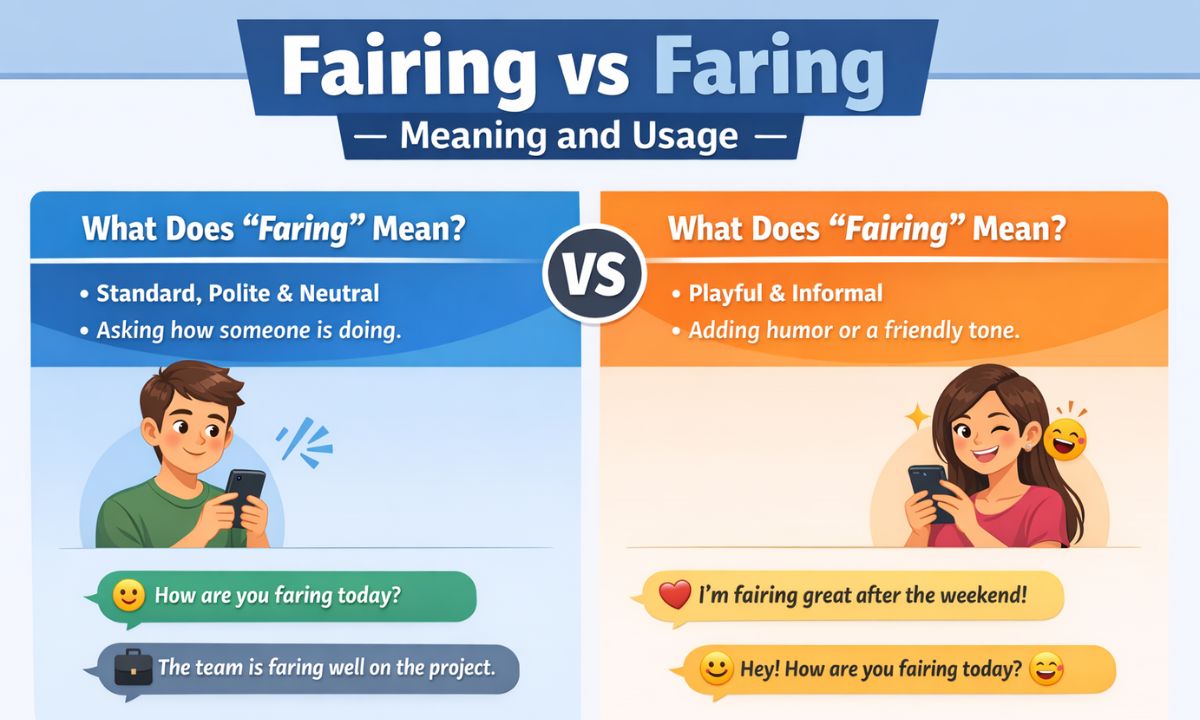
What Does “Faring” Mean?
Faring is the standard, traditional form of the word, often used to ask or describe how someone is doing. It is neutral, polite, and suitable for most contexts casual, professional, or romantic.
Examples:
- “How are you faring today?”
- “The team is faring well on the project.”
What Does “Fairing” Mean?
Fairing is a playful or informal variant of “faring.” It’s often used in texting or online chats to add personality, humor, or a friendly tone. It’s less formal and generally used among friends, partners, or casual communities.
Examples:
- “I’m fairing great after the weekend!”
- “Hey! How are you fairing today? 😄”
What Does “Fairing vs Faring” Mean in Texting?
At its core, “fairing vs faring” often comes from the traditional expression “How are you faring?” a polite way of asking how someone is doing. In texting, this can appear as:
- Faring: Asking about someone’s well-being.
- Fairing: A playful or intentional misspelling, sometimes used to add personality or humor.
The subtle difference between the two is mainly spelling preference, but context determines tone. Tech-savvy users, gamers, and young adults often twist traditional words for style, slang, or trendiness.
Example:
- Friend 1: “Hey! How are you faring today?”
- Friend 2: “I’m fairing well, just busy with work 😅”
Expanded Meanings of “Fairing vs Faring”
Understanding this phrase fully requires looking at its multiple interpretations in modern communication.
1. Casual/Friendly Meaning
In everyday texts, faring is a friendly check-in, similar to “How are you doing?” Fairing adds a playful twist.
Examples:
- “Hey! How are you faring?”
- “I’m fairing okay, just chilling at home.”
It conveys care without being too formal.
2. Romantic/Affectionate Meaning
In dating or romantic chats, faring/fairing can act as a gentle, caring opener or check-in.
Examples:
- “How are you faring today, love?”
- “I’m fairing better now that I hear from you ❤️”
Here, the word subtly communicates intimacy and attention.
3. Professional/Technical Meaning
In some work or technical environments, faring can reference progress or performance. For example, in project updates or reports:
Examples:
- “Our team is faring well on the new campaign.”
- “The system is fairing okay after the update.”
It’s polite, concise, and avoids sounding too casual in professional messaging.
4. Business or Workplace Meaning
For managers or colleagues, using faring signals engagement or inquiry into someone’s workload or progress.
Examples:
- “Hope you’re faring well with the new client tasks.”
- “Fairing fine, just wrapping up the report.”
It’s useful for professional check-ins without being intrusive.
5. Cultural or Niche Meanings (Sports, Gaming, etc.)
Gamers, sports enthusiasts, and online communities sometimes use fairing vs faring to discuss performance or status.
Examples:
- “How’s your team faring in the tournament?”
- “Fairing pretty strong in the new season!”
It’s context-dependent, so the meaning shifts based on activity.
Why Understanding “Fairing vs Faring” Matters in Text Communication
Misinterpreting this term can create small but noticeable misunderstandings:
- In romantic texts, it might seem disinterested if misused.
- In work messages, it could appear overly casual or out of place.
- In friendship chats, it can affect tone and rapport.
Correctly understanding and using it ensures you communicate clearly, politely, and with nuance.
How to Choose the Right Meaning of “Fairing vs Faring”
Follow these context-based tips:
- Check the relationship: Friend, partner, colleague, or online acquaintance.
- Consider tone: Casual, romantic, or professional.
- Observe platform norms: Social media, SMS, email, or gaming chats.
- Use spelling for effect: “Fairing” can be playful; “faring” is neutral and standard.
Quick Tip: If unsure, stick to faring for clarity, especially in professional or mixed-audience contexts.
Polite, Professional, and Casual Alternatives
Knowing alternatives helps you avoid miscommunication.
Casual Alternatives
- How’s it going?
- What’s up?
- How are things?
Professional Alternatives
- How are you doing?
- How is everything progressing?
- Hope all is well.
Affectionate Alternatives
- How are you, dear?
- How’s your day going, love?
- Feeling okay? ❤️
Real Examples of Using “Fairing vs Faring”
Friendship Texts
- “Hey, how are you faring after the trip?”
- “Fairing good! Had a great time with family.”
Romantic Texts
- “How are you faring today, darling?”
- “Fairing better now that I got your message 💕”
Workplace Messages
- “Team, how are we faring on the deadline?”
- “Fairing well, almost done with the report.”
Business Communication
- “Hope you’re faring well with the partnership deal.”
- “Fairing fine, just reviewing the final proposal.”
Informal Online Chats
- “Faring okay in this new game?”
- “Fairing great! Just leveled up 😎”
When NOT to Use “Fairing vs Faring”
Avoid using this term when:
- Writing formal emails or official reports.
- Messaging someone who may not understand modern texting slang.
- Context requires absolute clarity, e.g., legal or emergency communication.
Misuse can make messages appear confusing, overly casual, or insincere.
Comparison Table: “Fairing vs Faring” vs Other Common Abbreviations
| Term | Meaning in Text | Context | Tone |
| Faring | How someone is doing | Casual, professional, romantic | Neutral |
| Fairing | Playful version of “faring” | Casual, informal, friendly | Playful |
| BRB | Be right back | Chatting, gaming | Informal |
| TTYL | Talk to you later | Text, chat | Informal |
| How r u? | How are you? | SMS, social media | Casual/friendly |
Tone and Etiquette Tips for Using “Fairing vs Faring”
- Use faring in professional, neutral, or formal situations.
- Use fairing in casual, playful, or personal chats.
- Avoid overusing it it works best as a thoughtful check-in, not filler.
- Match tone with your relationship and platform.
Summary with Key Takeaways
- Faring = standard, polite, versatile.
- Fairing = playful, informal twist.
- Context decides tone: casual, romantic, professional, or niche.
- Alternatives exist for clarity in casual, professional, or affectionate communication.
- Misuse can cause small misunderstandings, so read the room!
Final Thought on How Digital Language Is Evolving
In 2026, understanding fairing vs faring is essential for clear and thoughtful digital communication. While faring remains polite, versatile, and professional, fairing adds a playful, informal twist that works well in casual or affectionate chats.
Context, tone, and audience are key using the right version ensures your message is understood as intended. By mastering these subtle differences, you can communicate confidently across friendships, romance, work, and online communities, staying in tune with the evolving digital language landscape.
Frequently Asked Questions
What does “faring” mean in text?
Faring is a polite way to ask someone how they are doing. It’s versatile and works in casual, professional, or romantic contexts.
What does “fairing” mean in text?
Fairing is a playful or informal version of “faring.” People often use it to add personality, humor, or a friendly tone in casual chats.
Can “fairing vs faring” be used in professional messages?
Yes, but faring is the safer choice. Fairing is more casual and may seem too informal in workplace emails or official communications.
How do I know which one to use?
Check the context and relationship: use faring for professional or neutral chats, and fairing for friends, romance, or playful online conversations.
Are there alternatives to “faring” and “fairing”?
Yes! Casual alternatives include “How’s it going?” or “What’s up?” Professional alternatives include “Hope all is well” or “How are things progressing?” Affectionate alternatives include “How’s your day going, love?”